
Material & process

The olive tree

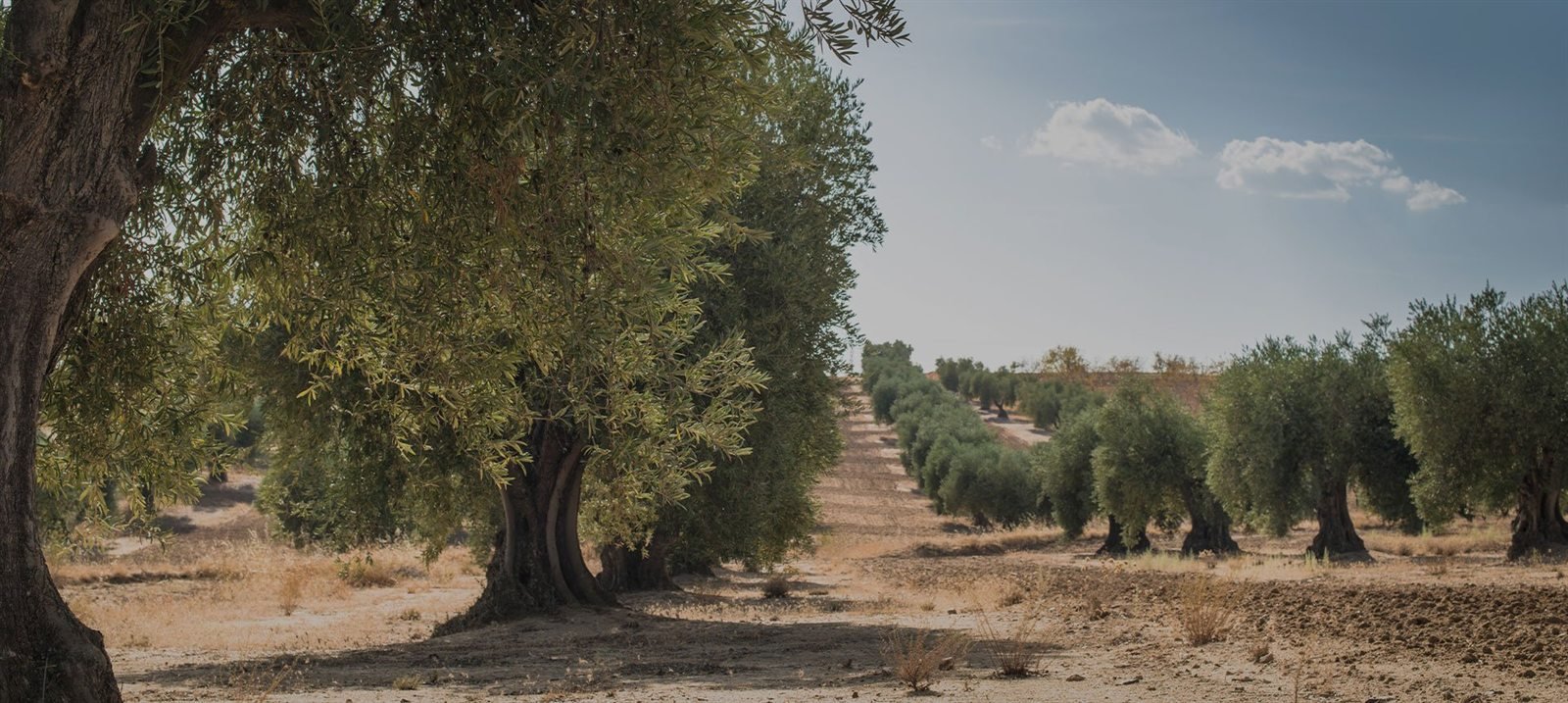
The olive tree is native to the Holy Land, where it has been cultivated since ancient times. Its branch has long been a symbol of peace and goodwill.

01 Grove · 02 Seasoning · 03 Carving · 04 Finishing Holy Land Olive Wood
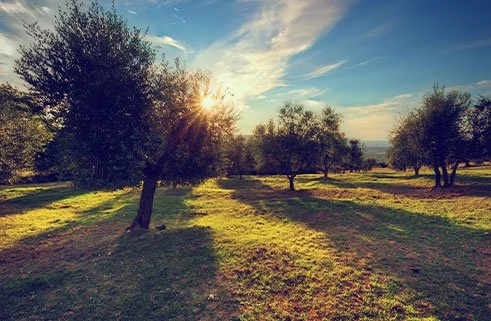
Sunlight across an olive grove
Ancient Holy Land olive groveStage 01 · Origin
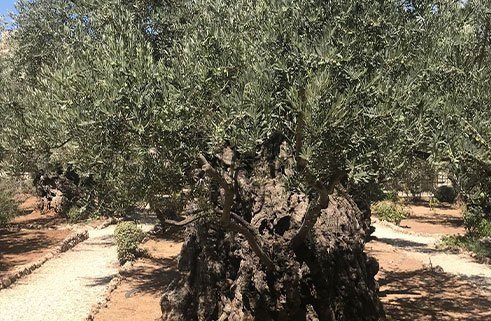
Ancient gnarled olive trunk in a Holy Land grove
Stage 01 / The Grove

A living tree

In the Book of Genesis, the dove sent out from the ark by Noah returned with an olive branch. The olive tree also appears throughout the association’s account of Christian life in the Holy Land.

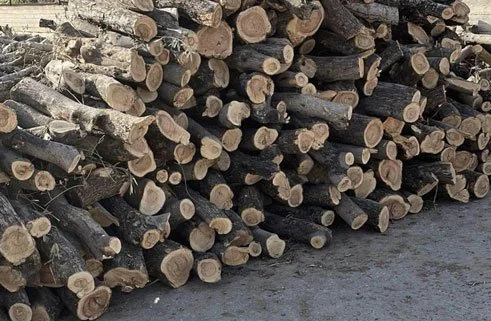
A stack of cut olive branches seen end-on
Trimmed branches stacked to seasonStage 02 · Drying
Raw olive-wood root burl showing weathered grain and density
Stage 02 / Preparation

Pruning and drying

The carvers use branches trimmed from living trees. After pruning, the wood is kept for a long period in a dark place, allowing it to dry gradually and limiting splitting or cracking.

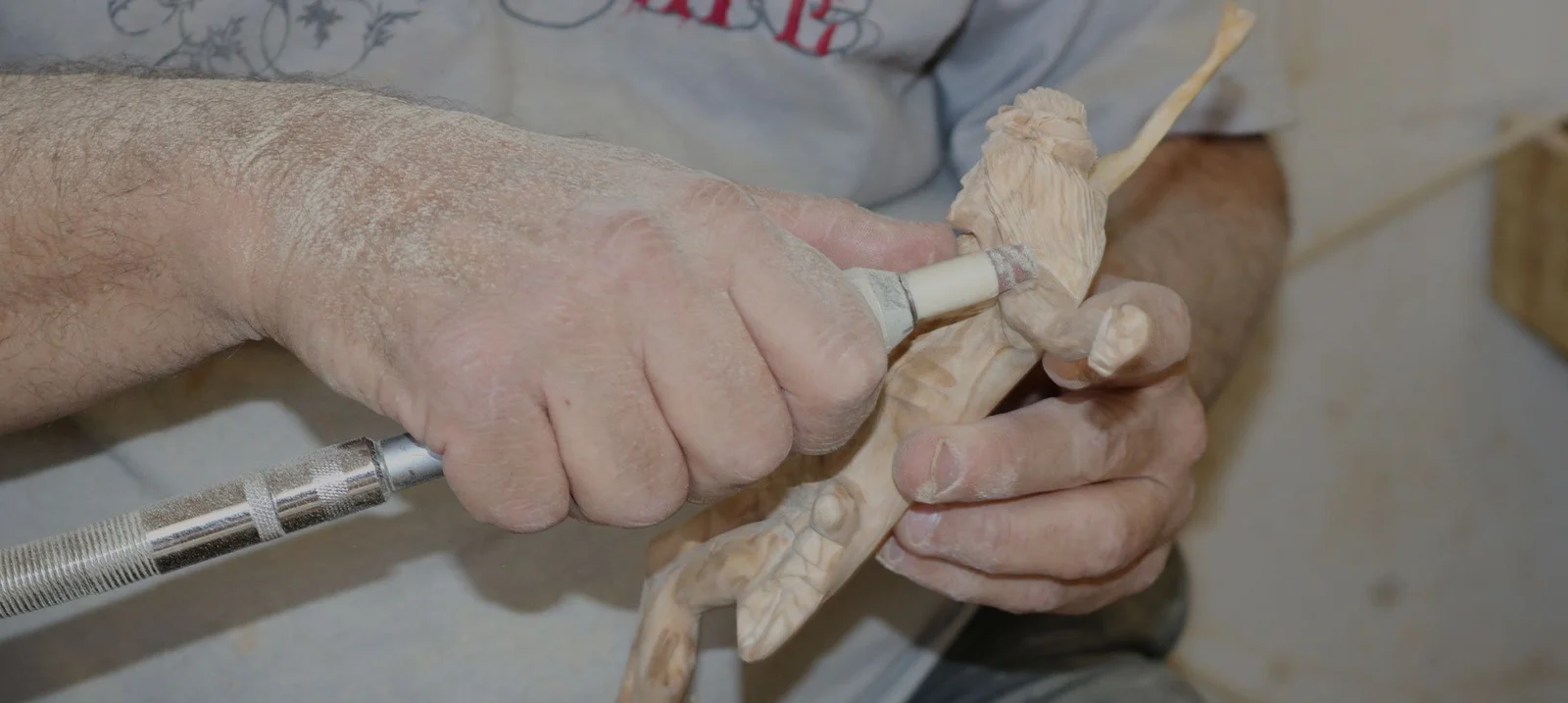
A carver holding a small piece of wood against a tool
Heartwood figure shaped by hand at the carving bench
Stage 03 / Carving & Finish

Inside the grain

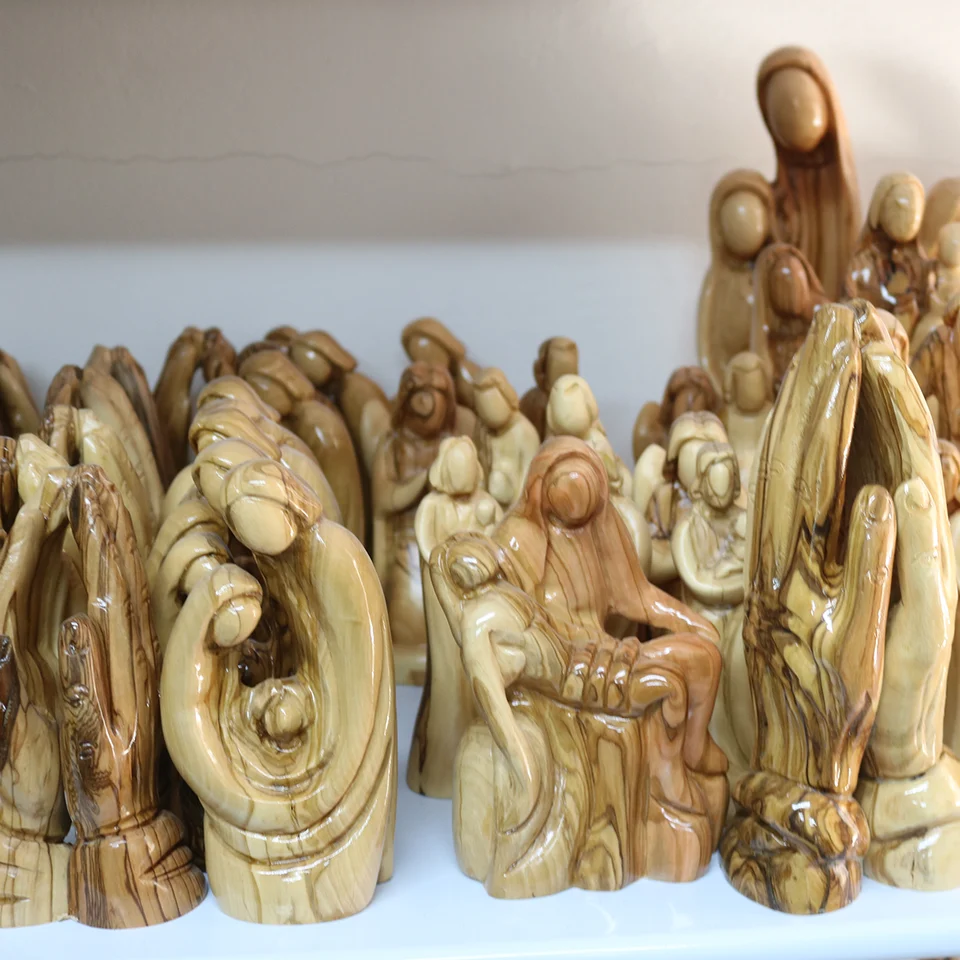
Olive wood is heavy and dense. Its grain lies hidden in the heart of the wood, so the pattern of each carving is different. Once carved, the wood is sanded and varnished to bring out the grain.

See the workshop photographs
Stage 04 / Workshop Details

Grain, handwork, and patina.

Explore the collection
Olive branch bearing fruit and silver-green leaves
Olive branches and fruit from trees pruned cleanly each season.
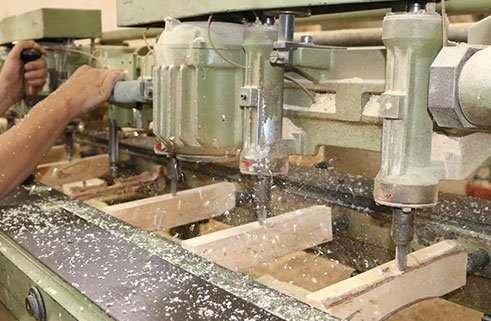
Multiple wooden blanks shaped at the workshop pantograph
Rough blank shaping at the bench prior to individual hand paring.
Finished olive-wood figures carved with flowing robes
Sanded and varnished figures highlighting distinctive heartwood grain.

Continue exploring

Search the site